/G\eorgetown
What does the University of Washington, the Seattle Center, Georgetown, and the lower Duwamish River communities have in common?
Hmmm...
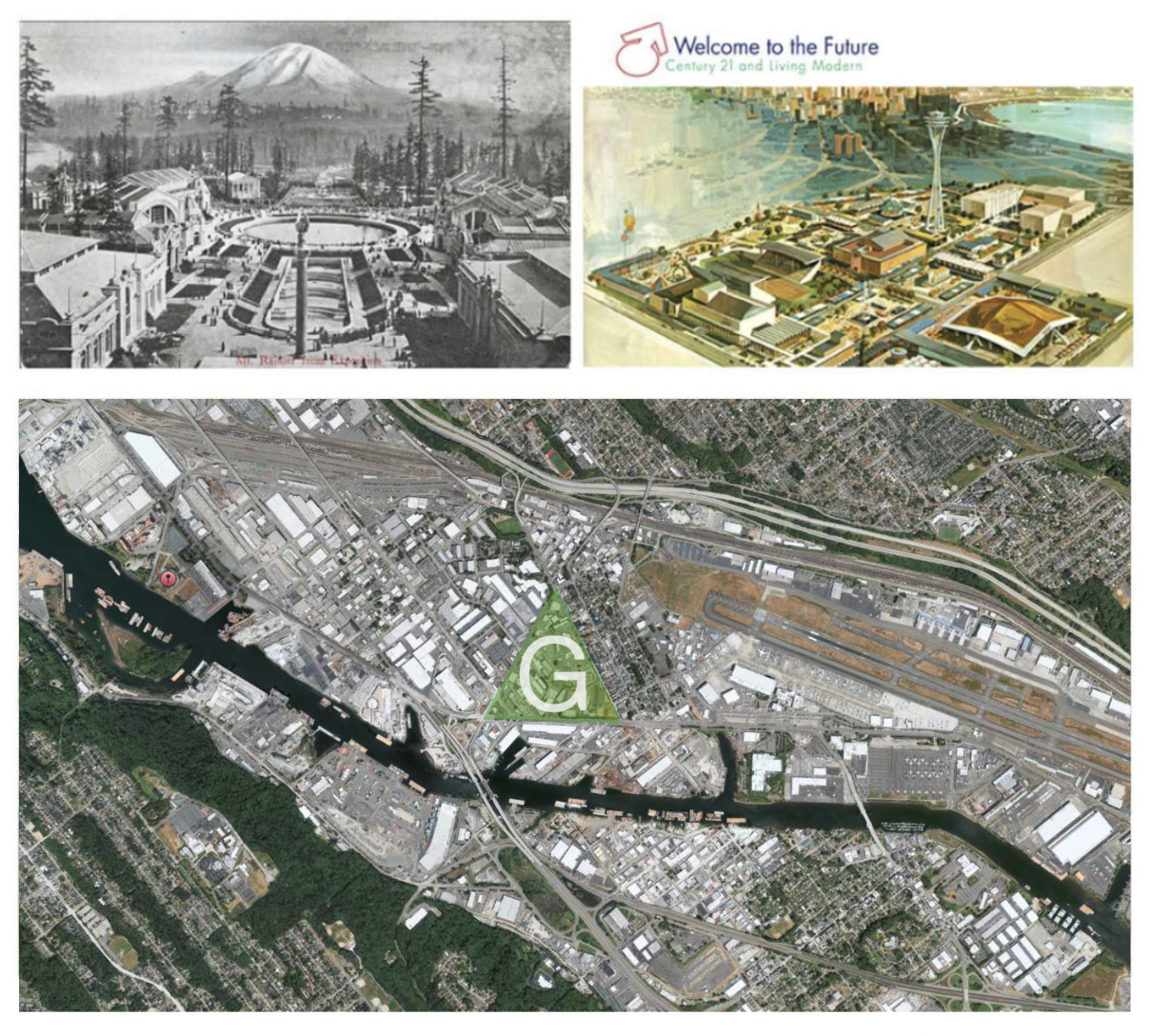
At first glance, they may seem like entirely different worlds. But look closer, and you’ll find they share a powerful connection: they are the geographic anchors of Seattle’s greatest eras of innovation, transformation, and civic imagination.
The Legacies of 1909 and 1962
The 1909 Alaska-Yukon-Pacific Exposition established the University of Washington’s modern campus and positioned Seattle as the gateway to the Pacific Rim and Alaska. Decades later, the 1962 Century 21 Exposition introduced a bold vision of the future based on science, technology, and innovative consumer culture, leaving behind the Seattle Center and the civic landmarks that continue to define the city's skyline and cultural identity.
Together, these two World's Fairs transformed Seattle's physical landscape, strengthened its civic and educational institutions, and inspired generations.
The Roots of the Duwamish Valley
While World's Fairs were reinventing the city's surface, the engines of its economy were being built along the Duwamish River. Georgetown, South Park, and the Lower Duwamish Valley trace their settler histories back to 1851, making them the oldest colonial neighborhoods in Seattle.
Shaped by the Duwamish River—Seattle’s only working river—these surrounding landscapes powered the Pacific Northwest's growth through maritime industries, manufacturing, engineering, and grit.
Today, that heritage is evolving. Georgetown has grown into one of Seattle’s designated Arts and Culture Districts, where artists, makers, entrepreneurs, and industrial businesses uniquely coexist.
21st Century Calling
As this new era of art and industry unfolds, Duwamish River Valley communities are now actively confronting the environmental legacy of industrialization. Georgetown, South Park, and their neighbors are leading conversations about environmental justice, ecological restoration, climate resilience, equitable infrastructure, and the future of urban development. They are demonstrating how places once defined by heavy industry can become global models of reimagined futures for regeneration.
So, what comes next?
If the Alaska-Yukon-Pacific Exposition defined the University of Washington, and Century 21 gave us the Seattle Center, what transformative vision will define the next century for the Duwamish River?
Georgetown Science Fair
The Georgetown Science Fair builds directly on this legacy. By connecting Seattle’s historic centers of innovation, the Georgetown Science Fair is reimagining the future fair—inviting the next generation to imagine—and help build—a more sustainable, equitable, and regenerative future alongside the Duwamish River.
Just as the World's Fairs once asked us to look toward the horizon, the Georgetown Science Fair asks us to look at our own backyard, bridging art, culture, science, and community to design the Seattle of tomorrow.
The seeds are being planted today!!