
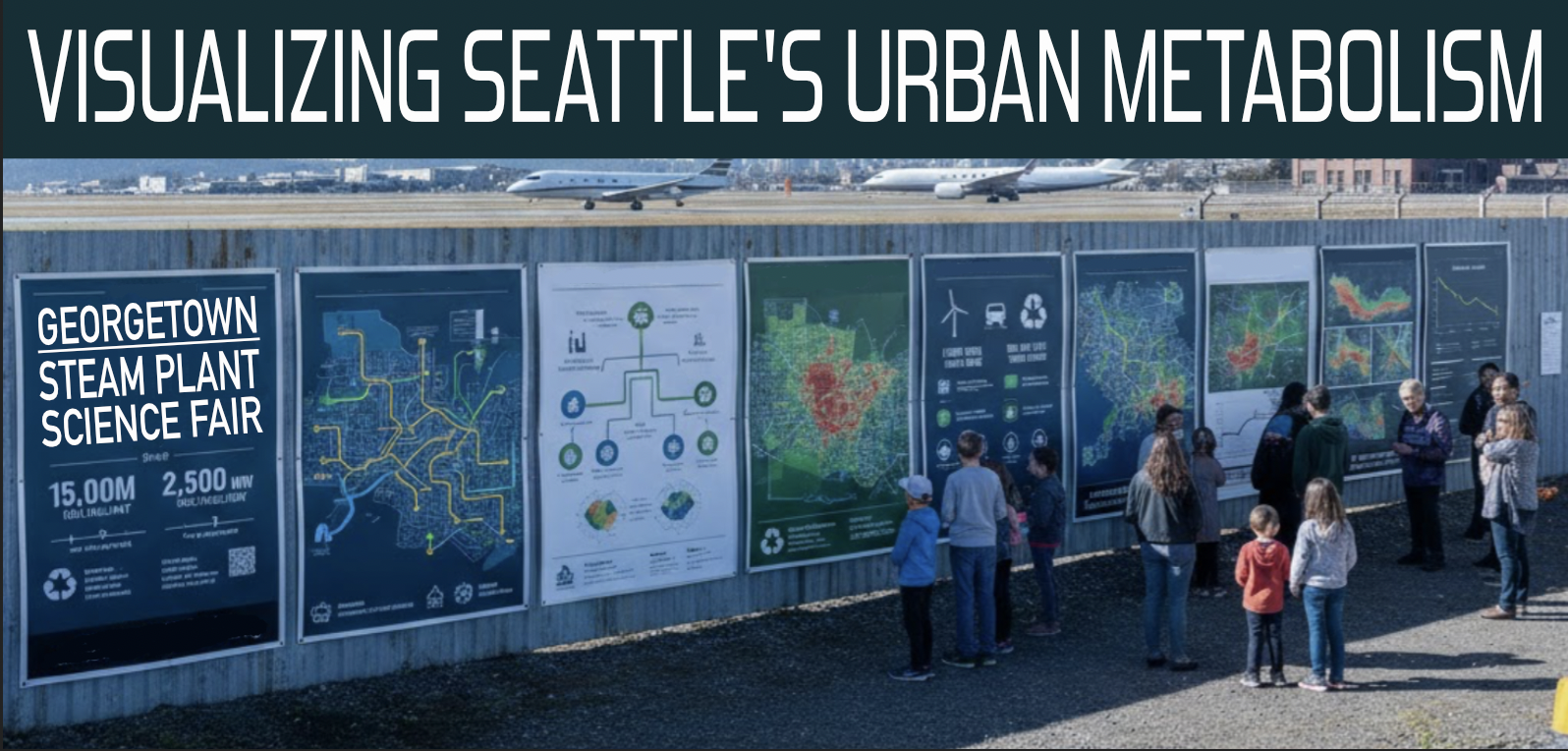
Above and below the busy streets of Seattle exists a complex network of resource flows. Unveiling the hidden systems of Seattle’s Urban Metabolism requires collaboration between government agencies, research institutions, private entities, and community members.
To better understand the complex network of our city’s urban metabolism, we are taking a deep dive into the systems that regulate the flow of material resources. By sharing your data and expertise, our goal is to create a comprehensive exhibit that provides a clear picture of how our city functions.
The Mission
Our goal is to create a comprehensive exhibit that provides a clear picture of how Seattle functions. By visualizing the "ins and outs" of our city, we aim to empower citizens to advocate for system upgrades, resource optimization, and a healthier urban ecosystem.
We are looking for visualizations that include:
Numbers: Provide us with the material, energy, resources use data. The ins. The outs. Everything that is available for public reference when it comes to modern consumer culture. Publicly available data is preferred.
Resource Flows: Maps depicting movement of water, energy, and materials through Seattle.
Origin-to-End Flow Charts: Track resources from source to consumption points and disposal sites.
Green Infrastructure Overlays: Layer maps showing existing green spaces and planned green infrastructure projects onto resource flow maps. This will highlight the role of green spaces in mitigating urban heat islands and stormwater management.
Waste Generation Heatmaps: Identify areas with high resource consumption and/or waste generation, allowing for targeted interventions, waste reduction programs, and promote alternative disposal systems.
Data-Driven Maps: maps to develop support strategies promoting renewable energy, sustainable transportation, and circular economy practices.
Climate Change Adaptation and Mitigation Maps: Showcase projected impacts on Seattle's built environment.
Monitoring Progress: by tracking resource consumption, waste generation, and green infrastructure development over time will help gauge the effectiveness of sustainability initiatives.
By sharing your data and expertise, we can create a comprehensive picture of inputs/outputs around resource flows and waste generation patterns. Combined, this knowledge has the potential to empower citizens to embrace the need for the upgrade and redesign of the vital systems we all depend upon on a daily basis, optimize resources flows, minimize waste, and a healthy urban ecosystem can thrive.