
REIMAGINED FUTURES
SEVEN GENERATION OF REGENERATION (2177)
Welcome to the Anthropocene—an era in which human activity is reshaping Earth’s climate, air, water, and ecosystems on a global scale.
Industrial systems powered by fossil fuels, extraction, and mass production have altered the chemistry of the atmosphere and contributed to widespread ecological damage. These systems were designed to maximize growth and profit, often without accounting for the long-term consequences for communities, public health, or the natural world.
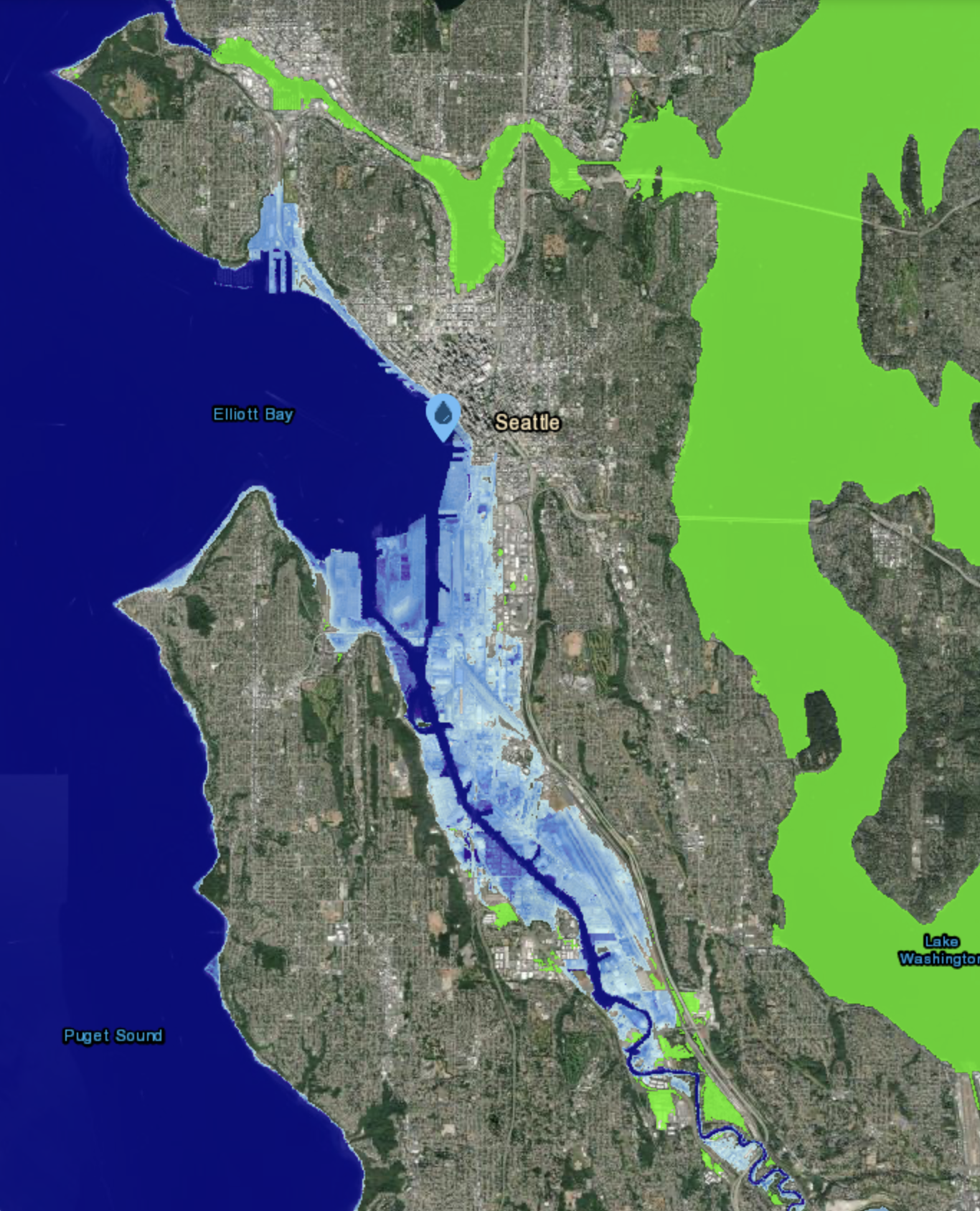
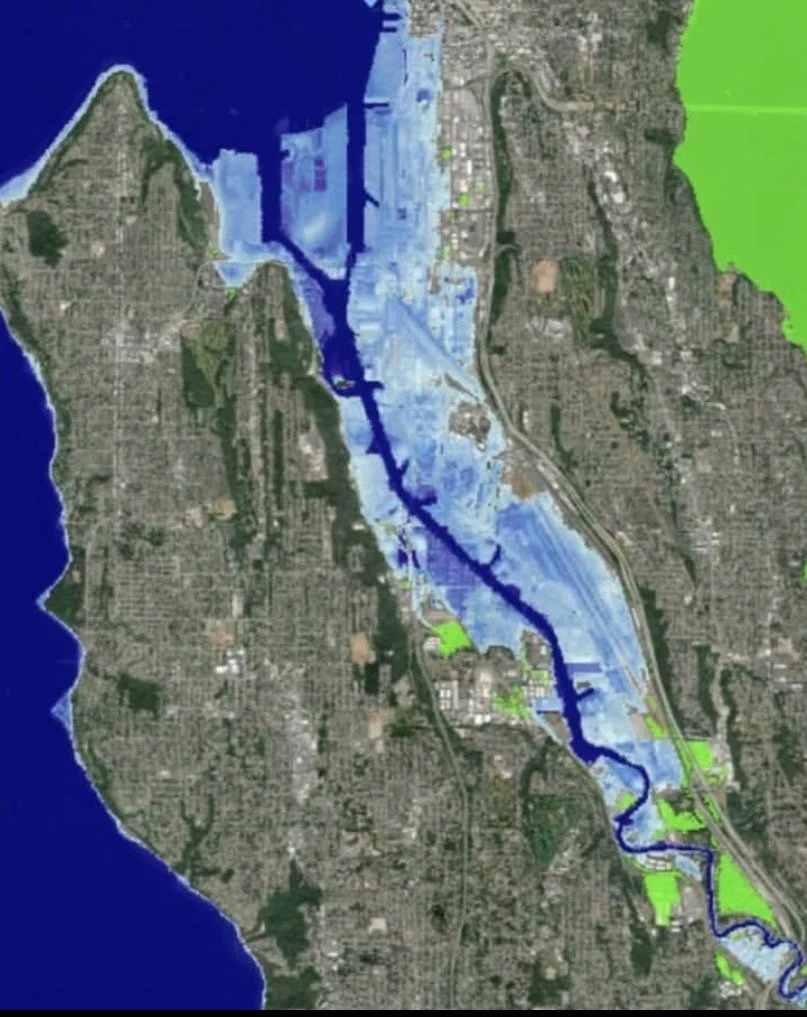
One place where these impacts can be seen locally is the Lower Duwamish River Valley in Seattle. Since the first colonial land claims in 1851, the environmental and health burdens created by industrialization have not been shared equally. Communities living, working, and playing near the river—especially Indigenous, immigrant, and working-class communities—have carried a disproportionate share of the impacts.
As we imagine the future of the Duwamish River, we recognize the importance of working in partnership with the first people of this land—the Duwamish Tribe—and learning from Indigenous knowledge, stewardship, and relationships with land and water. Repairing the river also means repairing relationships: between people and ecosystems, between industry and community, and between past harms and future possibilities.
BUSINESS AS USUAL
Under a business-as-usual scenario, the amount of carbon dioxide (CO₂) in the atmosphere will continue to rise. In 2026, atmospheric CO₂ concentrations breached 430 parts per million (ppm)—a first in human history. By the year 2100, scientists project CO₂ levels could rise to 900–1,000 ppm. Looking even further ahead—seven generations into the future, around the year 2177—CO₂ concentrations could reach 1,200–1,800+ ppm, creating conditions Earth has not experienced for tens of millions of years, when global temperatures and sea levels were far higher than they are today.
We are at a critical point in human history. The choices we make today will shape the future for generations to come. We must both reduce CO₂ pollution (mitigation) and prepare communities for the impacts of a warming world (adaptation).
Meeting these challenges will require profound changes in how our economy functions—moving away from fossil fuels and industries that pollute air, water, and soil, and instead building regenerative systems that restore ecosystems while supporting healthy communities. In the Lower Duwamish River Valley, this could mean strategically transitioning away from the most harmful industrial practices, cleaning up contaminated lands, restoring river ecosystems, and redesigning industrial areas to function in balance with nature rather than against it.
So where do we begin?
We begin by recognizing that climate adaptation, ecological restoration, economic transition, and community health are not separate challenges—they are deeply interconnected. The future of the Duwamish Valley depends on our ability to reimagine the relationship between industry, infrastructure, ecology, and the people who call this place home.
This work starts with listening to frontline communities, Tribal nations, workers, and local businesses. It requires investing in long-term environmental cleanup, expanding green infrastructure, restoring habitat corridors, improving public health, and creating pathways toward a circular and regenerative economy. It also means developing new forms of collaboration between government, industry, community organizations, scientists, and artists to envision and build a different future together.
The Lower Duwamish River Valley can become more than a sacrifice zone of the industrial era. It can become a living example of how communities adapt, heal damaged ecosystems, and transition toward a more resilient and regenerative future.
Duwamish Reimagined invites you to take a creative journey as ancestors-in-the-making.
How do you envision seven generations into the future?
What do you see—and how do we begin building it today?
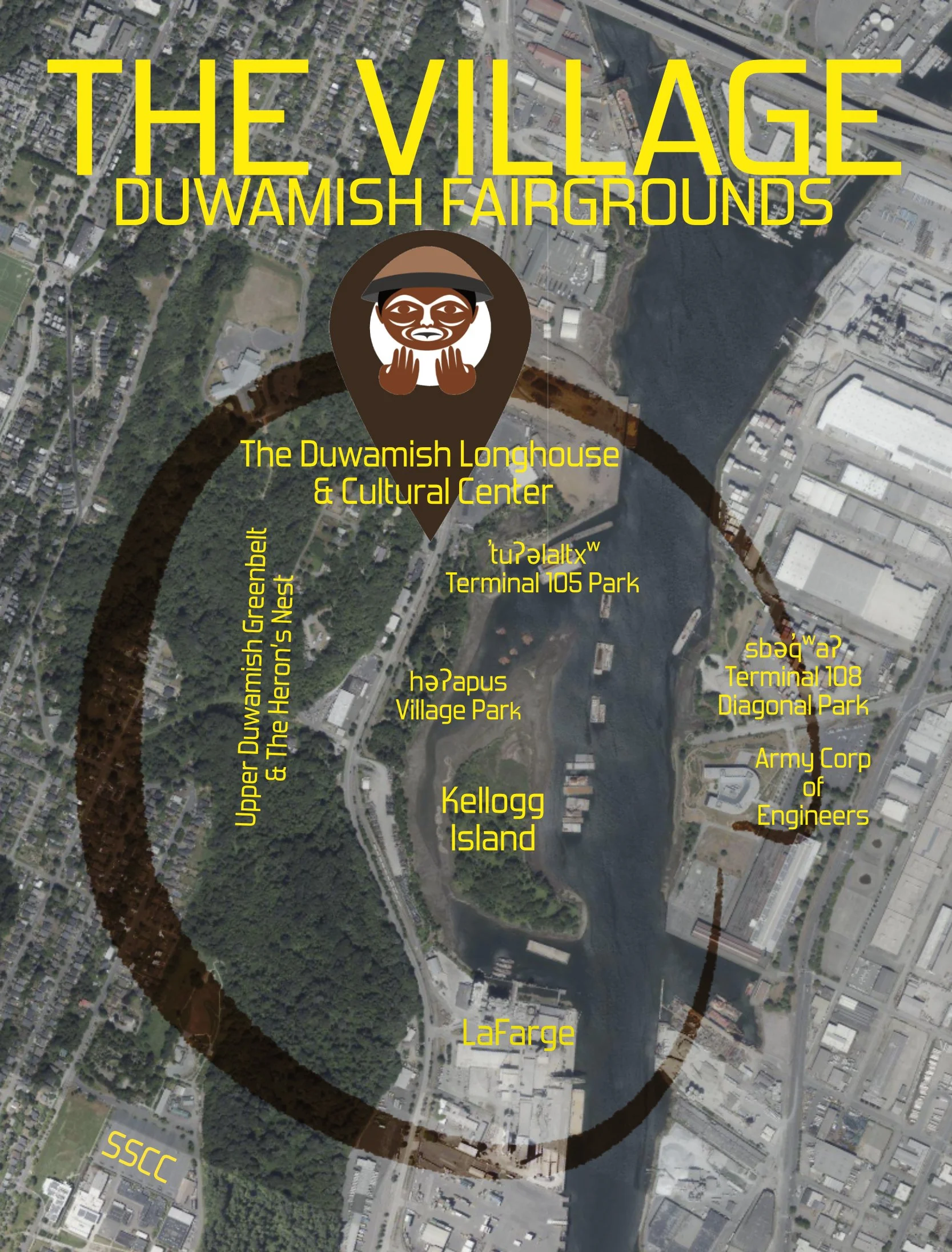
“The Village” Duwamish Fairgrounds is vision for a future Science Fair