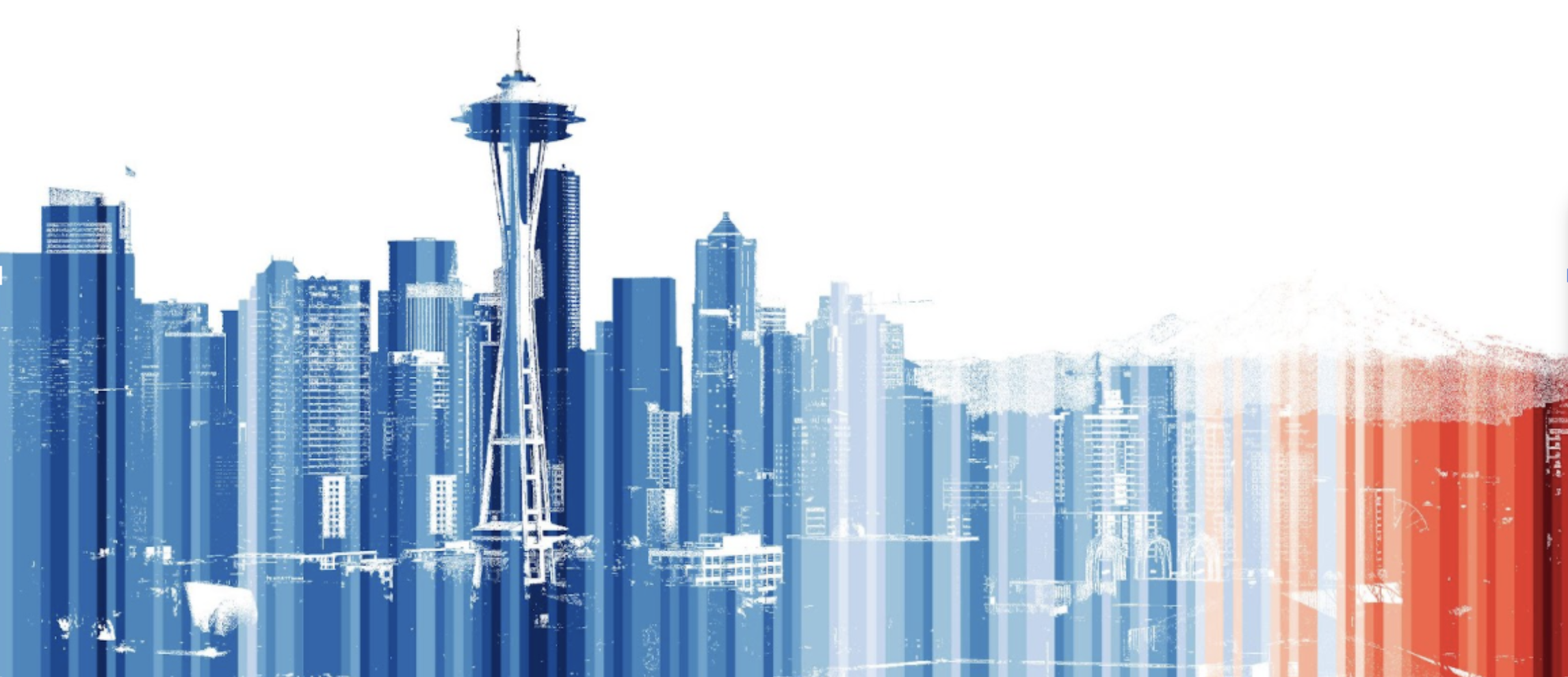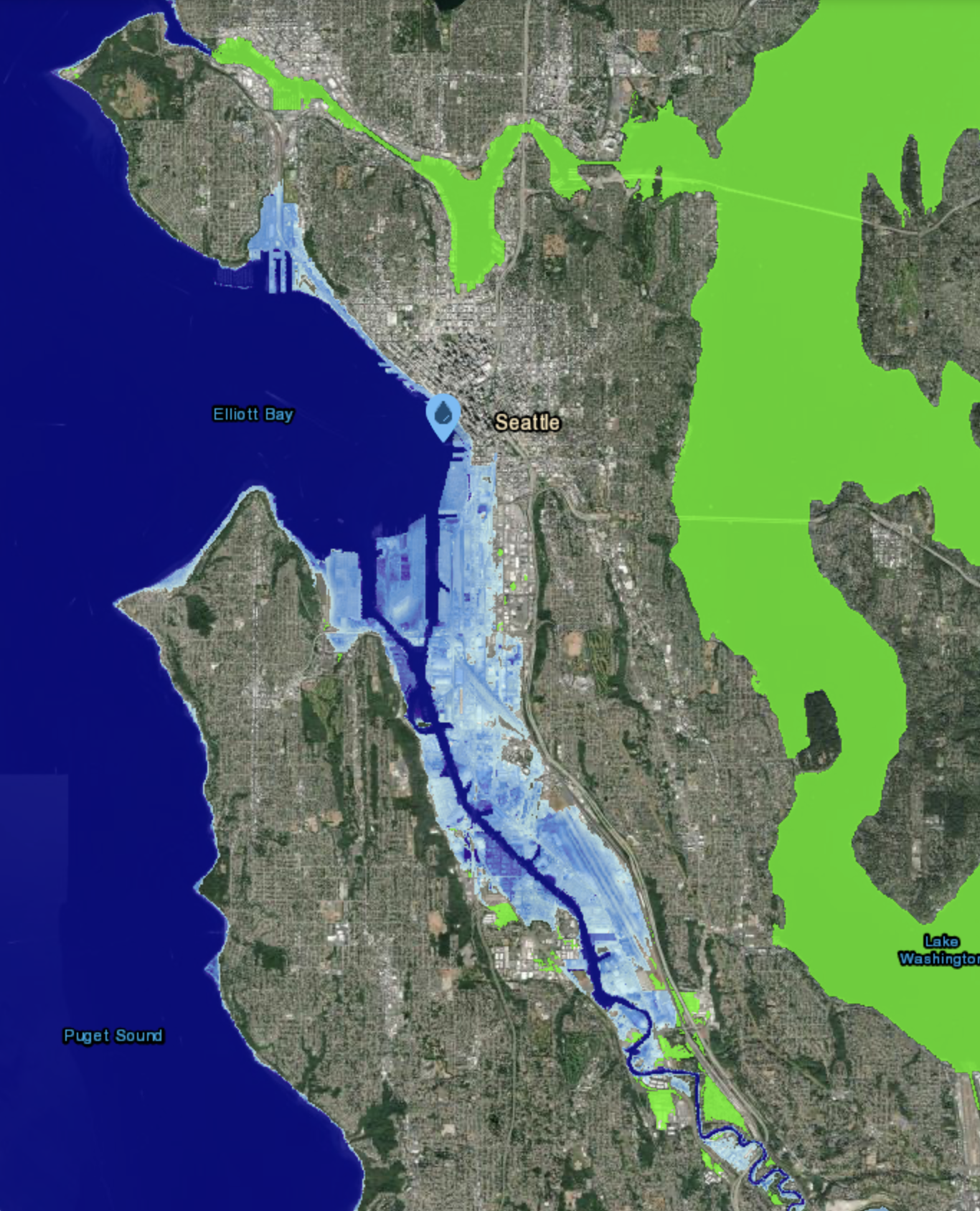
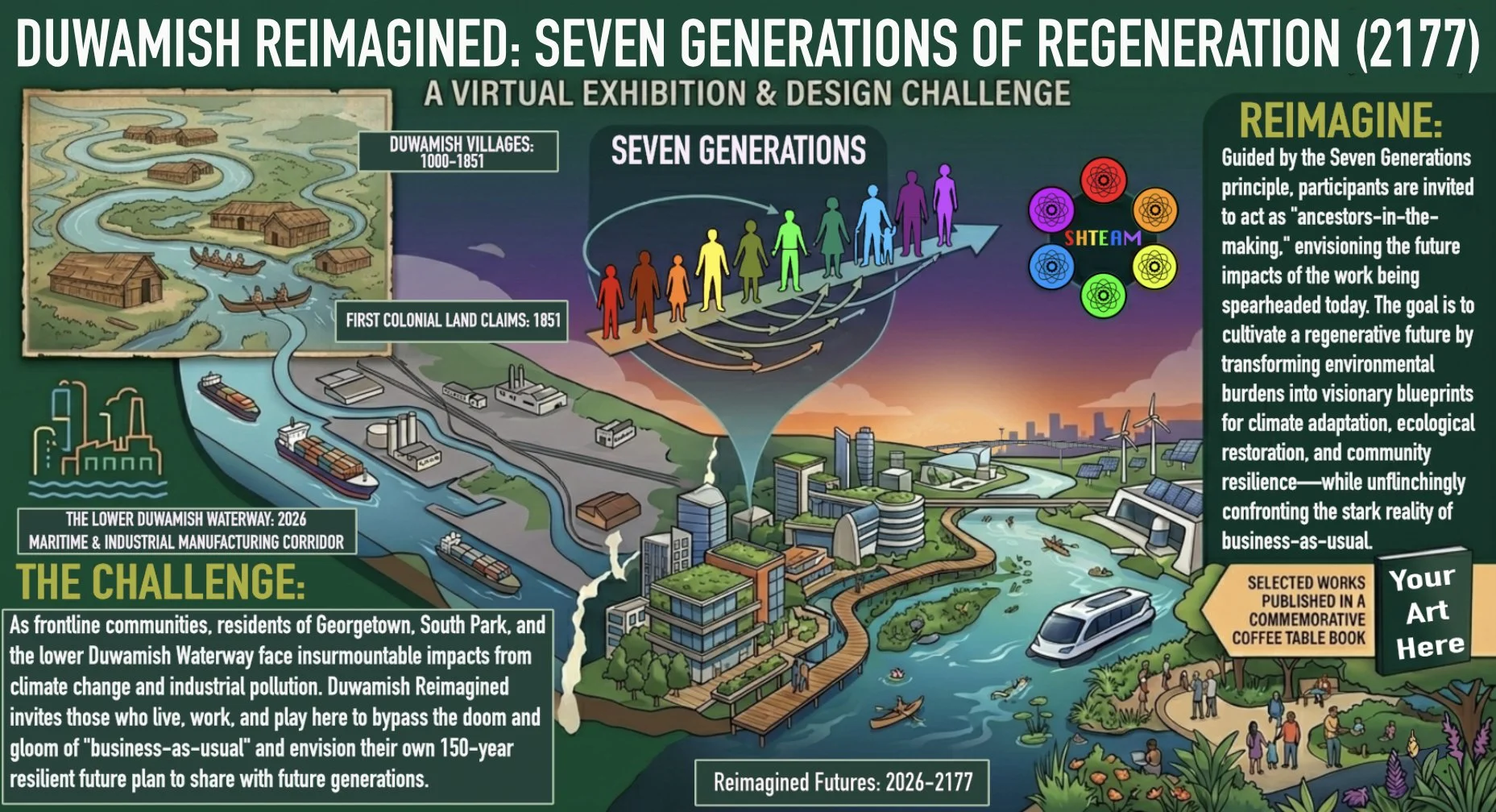
The above image is AI slop generated to offer a glimpse of potential futures. We are looking for artists to help bring these future visions to life.
Georgetown Science Fair Virtual Exhibition:
Duwamish Reimagined:
Seven Generations of Regeneration (2177)
Duwamish Reimagined invites students, artists, scientists, storytellers, and SHTEAM (Science. History. Technology. Engineering. ART. Math) enthusiasts of all ages to join us in a collective act of reimagined futures. Grounded in the deep history of the Lower Duwamish River Watershed and navigating the complexities of our industrial present, we are setting our sights on a regenerative future—one anchored by the Indigenous Seven Generations principle.
How will our work today shape the Duwamish Valley for the next 150 years?
To provide a full spectrum, we are also seeking submissions of speculative scenarios that examine the consequences of business-as-usual:
What might the future look like if current trajectories remain unchanged?
This virtual exhibition is intentionally interdisciplinary, inviting a wide range of formats, including: speculative fiction and storytelling, regenerative infrastructure concepts, architectural or landscape design proposals, scientific research and climate foresight, digital art and immersive media, community manifestos, maps of future ecosystem regeneration or neighborhood design plans, short films or 3-minute animations, soundtracks, and visual experiments.
The Virtual Exhibition:
Selected submissions will be featured as part of the Georgetown Science Fair’s Virtual Exhibition hosted on its own website: Duwamish Reimagined (To Be Developed) creating an interactive digital landscape that explores past, present, and future possibilities for five years.
Commemorative Archive:
Selected projects will contribute to a commemorative coffee table book—a narrative atlas: Duwamish Reimagined. Scheduled for publication in 2027, this volume will serve as a permanent physical record of our community’s vision, preserving these ideas for generations to come.
The Village:
As frontline architects of our future, these groups are leading the way, advocating for and advancing a healthier built environment throughout the Lower Duwamish River Watershed. Duwamish Reimagined documents their stories, visions, and research, revealing how their work today builds the social infrastructure needed to sustain our community seven generations into the future by anchoring our reimagined future in their collective power.
This exhibition will explore three landscapes:
Click each link to learn more
The Estuary: Pre 1851
The Meander:
Honoring the ancestral homeland and enduring stewardship of the Duwamish Tribe. This movement explores the deep-time relationship between the People of the Inside and the shifting tides of the river.
The Industrial Era:
1851 to Present
The Straight Line:
An era defined by colonization, rapid industrialization, and profound environmental change. This movement examines the legacy of extraction of the industrial landscape.
Reimagined Futures: (2177)
A journey through speculative visions, regenerative design proposals, and business-as-usual trajectories. This movement marks our passage deeper into the Anthropocene—an epoch in which human activity has become the dominant force shaping Earth’s ecosystems, climate, and resource flows.
Why 2177?
The 2177 horizon invites us to think beyond the not-so-distant future. It challenges us to imagine the long arc of community transformation. By envisioning 150 years into the future, we move past the constraints of the present and begin to design for the health and well-being of the generations who will inhabit the Duwamish Valley long after our own work is done.
THE FAIR ECONOMY
In this first exhibit, the World Fair becomes our roadmap—guiding us to explore how our collective actions today shape the next seven generations. This exhibition serves as both guide and invitation: to engage with the organizing principles of our shared vision, and to help you navigate and refine your own seven-generation perspective.
A WORLD FAIR FOR PLANETARY REPAIR
GEORGETOWN SCIENCE FAIR EXHIBIT